Top-down developmental policies often fail because they ignore the unique intelligence, resources, and social ties already active within local communities. True and lasting social transformation happens from the ground up, led by the very people who live the realities of their environment daily.
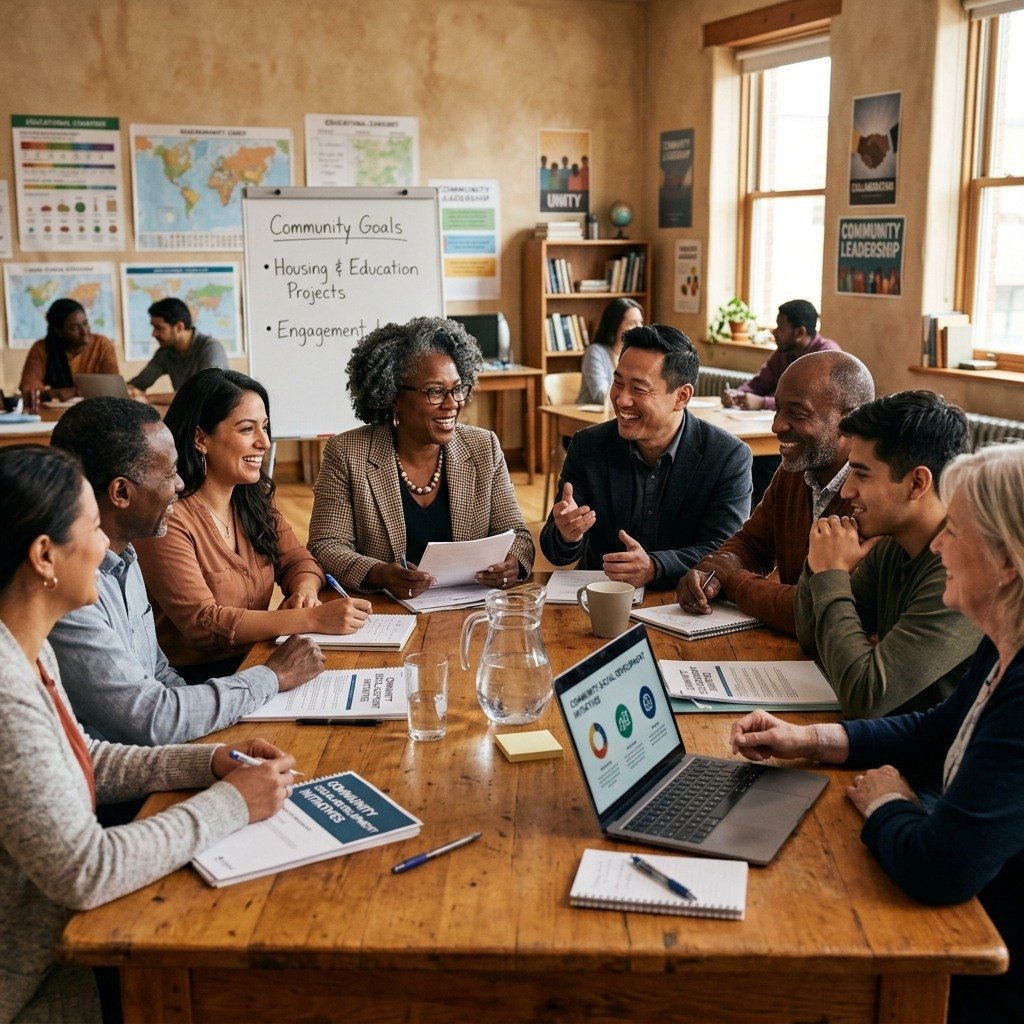
Redefining Growth: From Aid to Agency
For too long, community development has been viewed through the lens of aid and charity. While immediate relief is necessary in crises, structural growth requires shifting our perspective from charity to agency. When we treat local communities as recipients of aid, we inadvertently foster dependency.
Instead, we must recognize local leaders, youth, and women as active co-creators of their economic futures. Community-Led Development (CLD) focuses on identifying existing local resources—whether agriculture, indigenous crafts, micro-entrepreneurship, or regional labor—and organizing them into sustainable models of collective action.
“Sustained prosperity is not imported; it is incubated within the community by local hands, powered by shared ownership and local leadership.”
The First World Community Model
Our work with the First World Community initiative represents a practical implementation of this philosophy. The core goal is to elevate rural and semi-urban communities by transforming them into self-sustaining entrepreneurial ecosystems. We achieve this by focusing on three developmental pillars:
- Local Entrepreneurship: Training local micro-founders to build small business networks that keep financial currency circulating locally.
- Institutional Support: Connecting regional cooperatives with mentorship, low-cost capital, and external markets.
- Inclusive Leadership: Ensuring local voices lead decision-making processes, building a sense of collective ownership.
Actionable Steps for Regional Hubs
To successfully execute community-led initiatives, organizers and policymakers should focus on decentralizing development. First, map the native skills and latent assets of the region. Second, establish regional incubator hubs that provide digital and financial literacy to local micro-entrepreneurs. Finally, create local advisory councils that allow the community to guide and govern their development projects.
By empowering communities to map their own destinies, we build resilient societies capable of sustaining economic prosperity and nurturing future generations without losing their cultural roots.